
The daily Post

READ OUR BLOG

OpenAI, Oracle and Vantage Announce Major Stargate AI Data Center Campus

A new 4.5GW AI infrastructure campus in Port Washington is set to become one of the major data center developments supporting OpenAI’s Stargate initiative.

The race to build the infrastructure needed for next-generation artificial intelligence is expanding into Wisconsin.

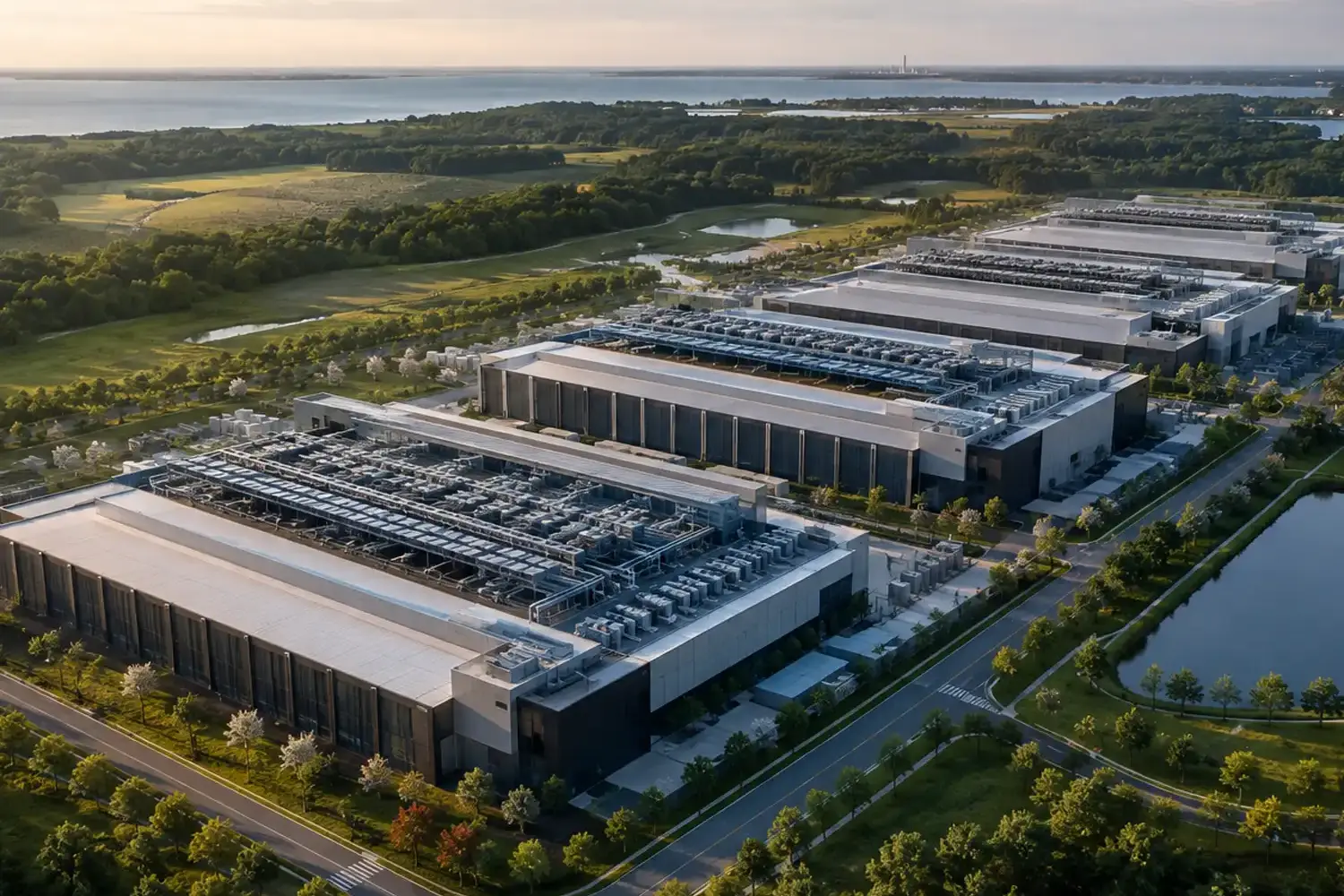
OpenAI, Oracle and Vantage Data Centers announced plans in October 2025 to develop a major AI data center campus in Port Washington, Wisconsin, approximately 30 minutes from Milwaukee. The development is part of the broader Stargate initiative and the previously announced partnership between OpenAI and Oracle to develop up to 4.5 gigawatts of additional AI data center capacity.

Named Lighthouse, the campus is planned as Vantage’s first data center campus in Wisconsin. The project is expected to include four data centers with approximately 902MW of critical IT capacity across a 672-acre site and approximately 2.5 million square feet of space. Completion is currently scheduled for 2028.

A New Hub for AI Computing

The Wisconsin project illustrates how demand for AI computing is pushing data center development beyond traditional technology hubs.

Modern AI systems require enormous amounts of computing power, which in turn requires specialized facilities capable of supporting high-density servers, advanced cooling systems, reliable power infrastructure and extensive network connectivity.

The Lighthouse campus is designed specifically around these requirements, with Vantage planning rack densities of up to 1.4kW per square foot and multiple power feeds throughout the campus.

The project is part of a much larger Stargate expansion. OpenAI previously announced a partnership with Oracle to develop 4.5GW of additional Stargate capacity in the United States, complementing the Stargate campus in Abilene, Texas and other projects.

Designed for Next-Generation AI Hardware

One of the most important aspects of the Lighthouse project is its cooling architecture.

As AI accelerators become increasingly powerful, traditional air cooling becomes more difficult to use efficiently at extremely high rack densities.

Vantage says the Wisconsin campus will combine air-cooled and liquid-to-liquid cooling technologies to support next-generation GPU workloads.

The campus will also use a closed-loop chilled-water system, designed to minimize water consumption while providing the cooling capacity required by high-density computing equipment. Vantage says the planned cooling design is intended to achieve a water utilization efficiency close to zero liters per kilowatt-hour.

This is an increasingly important consideration as data centers consume more power and generate more heat.

Powering the AI Infrastructure Buildout

Power availability is another major challenge for large-scale AI data centers.

The Lighthouse campus is being developed with a focus on new zero-emission energy resources, including solar, wind and battery storage.

According to Vantage, 70% of the campus’ energy capacity will be allocated to Lighthouse, while 30% will be made available to other Wisconsin consumers. The remaining energy consumed by the campus is planned to be matched through renewable energy purchases annually.

Vantage and utility provider We Energies are also planning significant power infrastructure investments to support the project.

The companies say the development will add nearly 2GW of new energy to the grid, with 30% intended for homes, farms and other businesses currently served by the utility.

Infrastructure Investment Beyond the Data Center

The Lighthouse project is expected to affect more than the technology infrastructure itself.

Vantage has committed at least $175 million toward regional infrastructure improvements, including expanded water and wastewater treatment capacity, improvements to water mains and sewer lines, a new water tower and power infrastructure.

The company has also announced plans to develop approximately 500 acres of the 672-acre property while preserving and enhancing surrounding natural areas.

The plans include planting more than 2,000 native trees, protecting wetlands and creating landscaped areas intended to provide natural sound mitigation. Vantage is also pursuing LEED certification for the campus.

Thousands of Jobs Expected

Large-scale data center construction can also have a significant economic impact on the communities where facilities are developed.

The Lighthouse project is expected to create more than 4,000 skilled construction jobs, with most expected to be union positions.

Once the campus is operational, Vantage and Oracle expect the development to support more than 1,000 long-term jobs, along with thousands of additional indirect jobs.

Vantage estimates the project could contribute approximately $2.7 billion to regional GDP.

The company also says it will work with local manufacturers, builders, suppliers and businesses as the development progresses.

Connectivity for a High-Performance AI Campus

AI infrastructure isn’t only about GPUs and electricity.

Large AI clusters require extremely high-bandwidth networking infrastructure to connect computing systems and move enormous volumes of data.

The Lighthouse campus is planned to have multiple diverse fiber pathways and operate as a carrier-neutral campus.

Vantage says each building will have three meet-me rooms and a dedicated point of entry, with multiple fiber paths available to carriers.

This type of network redundancy is important for AI workloads, where connectivity failures can affect large clusters of expensive computing equipment.

Why Wisconsin Matters

The decision to build a major AI campus in Wisconsin highlights a broader trend in the data center industry.

As demand for computing capacity increases, developers are increasingly looking for locations that can provide:

  • Large amounts of available land
  • Reliable electrical infrastructure
  • Access to new energy resources
  • Fiber connectivity
  • Cooling resources
  • Skilled labor
  • Supportive local infrastructure
  • Long-term expansion opportunities

Vantage’s existing North American portfolio shows the company’s expansion across multiple markets, while Port Washington represents its first campus in Wisconsin.

The Lighthouse development demonstrates how the Midwest is becoming increasingly important to the next generation of AI infrastructure.

Part of a Much Larger Stargate Strategy

The Wisconsin campus should also be viewed as one piece of the broader Stargate buildout.

OpenAI, Oracle and SoftBank announced multiple new Stargate sites in 2025, bringing planned capacity across the initiative to several gigawatts. OpenAI said the expansion was designed to accelerate the development of the infrastructure needed to support future AI workloads.

The Wisconsin campus is therefore not simply another data center.

It represents part of a much larger effort to build the physical infrastructure required for increasingly powerful AI systems.

The Future of AI Will Require More Than GPUs

The rapid development of projects like Lighthouse illustrates an important reality about the AI boom.

Building the next generation of AI requires much more than semiconductor technology.

It requires land, electricity, cooling, construction, networking, water management and skilled workers.

As AI models and applications continue to grow, the companies capable of providing this infrastructure will become increasingly important to the technology ecosystem.

The Port Washington project is a clear example of that transition.

With nearly a gigawatt of planned IT capacity, advanced liquid cooling, new energy resources and extensive regional infrastructure investment, Lighthouse represents the scale and complexity of the facilities being developed to support the next era of artificial intelligence.

And with completion targeted for 2028, Wisconsin is positioning itself to become an important part of that infrastructure story.


Source & Attribution

Source: OpenAI, Oracle and Vantage Data Centers Announce Stargate Data Center Site in Wisconsin
Published: October 22, 2025
Originally published by: Vantage Data Centers

Read the full original announcement on Vantage Data Centers

Editor’s Note: This article is an original editorial adaptation based on information presented in the original Vantage Data Centers announcement. It has been rewritten for our readers and is not a reproduction of the original article.

The project details above are based primarily on Vantage’s announcement and its current Lighthouse campus information.
How Hyperscalers

How Hyperscalers Are Financing the Next Computing Era

Artificial intelligence is no longer just a software story.

Behind today’s AI boom is an enormous physical infrastructure buildout involving data centers, GPUs, networking equipment, memory, cooling systems, power infrastructure and thousands of miles of supporting connectivity.

According to an analysis published by Introl, Amazon, Microsoft, Google, Meta and Oracle are projected to spend approximately $602 billion on infrastructure in 2026, representing a significant increase from the previous year. Around three-quarters of that spending is expected to be directed toward AI infrastructure.

The scale of this investment raises an important question:

How are the world’s largest technology companies financing an infrastructure expansion of this magnitude—and can the returns from AI eventually justify the cost?

AI Is Changing the Economics of Cloud Infrastructure

For years, major technology companies were primarily associated with software, online services and relatively asset-light business models.

AI is changing that.

Training and operating advanced AI models requires enormous amounts of computing capacity. That means hyperscalers must continually invest in GPUs, custom accelerators, servers, networking, data centers and power.

Introl’s analysis estimates that approximately $450 billion of the projected $602 billion in 2026 hyperscaler capital expenditure could be directed toward AI infrastructure. Traditional cloud infrastructure and other investments make up much of the remainder.

This represents a major transformation in capital intensity.

The companies building the world’s AI infrastructure increasingly resemble large industrial infrastructure operators—because their growth depends not only on software but also on physical facilities and equipment.

The Five Hyperscalers Driving the Buildout

The spending is concentrated among five major companies:

  • Amazon
  • Microsoft
  • Google
  • Meta
  • Oracle

Each company is approaching the AI infrastructure race somewhat differently.

Amazon is expanding AWS capacity while also investing in its own AI accelerators such as Trainium and Inferentia.

Microsoft is expanding Azure’s AI capacity and its global data-center footprint.

Google is investing heavily in both data centers and its custom TPU accelerators.

Meta is building enormous infrastructure to support its AI models and Llama ecosystem.

Oracle, although smaller than the other hyperscalers, is aggressively expanding its cloud infrastructure to compete for AI workloads.

The result is a massive increase in demand for virtually every component required to build an AI data center.


Where Is the Money Going?

The projected AI infrastructure spending isn’t going into a single category.

It is distributed across an enormous ecosystem.

According to Introl’s analysis, approximately:

Infrastructure Category Estimated 2026 Spending
GPUs & Accelerators ~$180B
Data Center Construction ~$120B
Networking ~$50B
Memory ~$40B
Cooling ~$25B
Power Infrastructure ~$20B
Other Infrastructure ~$15B

This demonstrates how AI investment extends far beyond buying GPUs.

Every new GPU cluster requires buildings, electrical systems, networking, cooling, backup power, physical security and extensive deployment infrastructure.

In other words, AI demand is becoming an infrastructure supply-chain story.

Data Centers Are Becoming Power Plants in Their Own Right

One of the biggest challenges is the amount of electricity required to operate modern AI facilities.

Introl estimates that the projected data-center construction spending could translate into approximately 15–20 GW of new data-center capacity and hundreds of new facilities globally.

That level of demand puts pressure on utilities and energy developers.

Traditional utility planning can take years, while AI companies are attempting to bring computing capacity online much faster.

This is encouraging interest in several approaches, including:

  • New utility-scale generation
  • Renewable energy projects
  • Nuclear power agreements
  • Power purchase agreements
  • On-site generation
  • Behind-the-meter power systems

The AI infrastructure race is therefore also becoming an energy infrastructure race.


The Hidden Bottleneck: AI Hardware Supply

Even when companies have the money to build new AI infrastructure, they still need the hardware.

And some of that hardware is in extremely limited supply.

High-Bandwidth Memory

High Bandwidth Memory, or HBM, is particularly important for modern AI accelerators.

Advanced GPUs require enormous amounts of high-speed memory to process AI workloads efficiently.

However, HBM manufacturing is significantly more resource-intensive than conventional memory production. Introl’s analysis highlights HBM availability as one of the major constraints on AI infrastructure deployment.

That means adding more data centers doesn’t necessarily solve the problem.

The industry also needs sufficient memory manufacturing capacity.

Advanced Chip Packaging

Another important bottleneck is advanced semiconductor packaging.

Technologies such as TSMC’s CoWoS packaging are essential for assembling today’s high-performance AI processors.

If chip manufacturing expands faster than packaging capacity, the packaging stage can become the limiting factor.

This creates an unusual situation:

The industry can have enormous amounts of capital available while still being unable to deploy infrastructure as quickly as planned.


Debt Is Becoming Part of the AI Infrastructure Strategy

The scale of AI spending also creates a financial challenge.

Hyperscalers have historically generated enormous amounts of cash, allowing them to fund significant portions of their infrastructure expansion internally.

But the size of today’s investment cycle is changing that equation.

Introl reports that technology companies issued approximately $428 billion in bonds during 2025, while the major hyperscalers collectively added roughly $121 billion in new debt.

Companies including Meta, Alphabet and Oracle have made significant debt-market moves to support infrastructure expansion.

Future borrowing could become even larger if AI infrastructure spending continues at the projected pace.

This creates a new dynamic for the technology sector:

AI growth is increasingly being financed not only by operating cash flow, but also by the global credit markets.


The Big Question: Will AI Generate Enough Revenue?

This is where the story becomes more complicated.

The infrastructure investment is enormous, but the revenue generated directly from AI services is still developing.

Introl’s analysis highlights a significant gap between current AI-related revenue and the amount being invested into AI infrastructure.

For hyperscalers, the assumption is that AI demand will continue accelerating.

Businesses will use more AI APIs.

More companies will deploy AI agents.

Inference workloads will increase.

AI-powered applications will become part of everyday business operations.

And demand for cloud computing will continue to grow.

If those assumptions are correct, today’s infrastructure spending could provide the foundation for substantial future revenue.

But if AI adoption grows more slowly than expected, companies could face a difficult situation involving expensive infrastructure, large depreciation costs and increasing debt obligations.


Utilization May Matter More Than Raw Capacity

Building more GPUs does not automatically mean generating more revenue.

The GPUs need to be utilized.

AI training workloads can be highly intensive but may not operate continuously at maximum capacity. Inference workloads could eventually provide a more consistent source of demand as AI applications become widespread.

This makes GPU utilization one of the most important metrics to watch.

A data center filled with expensive accelerators that remain underutilized could become a significant financial burden.

Conversely, consistently high utilization could dramatically improve the economics of the infrastructure investment.

The next phase of the AI race may therefore be less about simply acquiring more GPUs and more about using them efficiently.


What This Means for Data Center Infrastructure

The AI buildout creates enormous opportunities for companies involved in physical infrastructure.

Data-center developers, electrical contractors, networking specialists, cooling companies and equipment manufacturers are all facing increased demand.

But the opportunity also comes with risk.

A large portion of the new infrastructure demand is concentrated among a relatively small number of customers.

If hyperscalers reduce capital spending, the effects could ripple through the entire supply chain.

Infrastructure companies therefore need to balance growth with diversification, capacity planning and financial discipline.


Speed Is Becoming a Competitive Advantage

Another major change is the speed at which AI infrastructure needs to be deployed.

Traditional data-center development can take years.

The current AI race is pushing developers and operators to compress those timelines dramatically.

That creates pressure across the entire project:

Power → Construction → Cooling → Networking → Hardware → Commissioning

A delay in any one of these areas can prevent an entire AI facility from becoming operational.

This is why supply-chain management and project execution are becoming just as important as the underlying technology.


The AI Infrastructure Race Is Just Beginning

The projected $600 billion spending level represents more than an enormous technology investment.

It signals a fundamental change in how computing infrastructure is built.

AI is creating demand for:

  • Massive GPU clusters
  • High-density data centers
  • Advanced liquid cooling
  • High-voltage electrical infrastructure
  • New power generation
  • High-speed networking
  • HBM memory
  • Advanced semiconductor packaging
  • Specialized construction
  • New financing models

And these requirements are interconnected.

More GPUs require more power.

More power produces more heat.

More heat requires better cooling.

More computing capacity requires more networking.

More facilities require more electricity.

And all of it requires capital.

What Comes Next?

The most important questions for the next few years aren’t simply about how many GPUs companies can purchase.

The bigger questions are:

Can AI revenue grow quickly enough to justify the infrastructure investment?

Can semiconductor and memory suppliers expand quickly enough to meet demand?

Can utilities provide enough electricity?

Can hyperscalers continue borrowing at the current pace?

And can data-center developers build infrastructure fast enough to keep up?

The answers will determine whether today’s enormous AI infrastructure spending becomes one of the most successful technology investments in history—or an infrastructure cycle that ultimately proves too aggressive.

For now, one thing is clear: the AI revolution is no longer happening only inside computers. It is being built in data centers, power plants, semiconductor factories and construction sites around the world.


Source & Attribution

Source: The $600B AI Infrastructure Buildout: Hyperscaler CapEx, Debt, and Supply Chain Reality
Author: Madison Kersh
Originally published by: Introl

Read the full original article on Introl

Editor’s Note: This article is an original editorial adaptation based on information presented in the original Introl publication. It has been rewritten for our readers and is not a reproduction of the original article.

The source page currently identifies Madison Kersh as the author and discusses the $602 billion 2026 projection, $428 billion in 2025 technology bond issuance, supply-chain constraints, and the broader financial and infrastructure implications of the AI buildout.

100 KW Gpu

100kW+ GPU Racks: Why AI Data Centers Are Rethinking Power and Cooling

AI infrastructure is entering a new era of extreme computing density. As GPU systems become more powerful, data centers are facing a fundamental challenge: how do you deliver enormous amounts of power and remove the resulting heat without compromising reliability, safety, or efficiency?

Traditional data center racks were commonly designed around relatively modest power requirements. Modern AI workloads are changing that equation rapidly, with GPU infrastructure now pushing rack densities beyond 100kW.

According to Introl, NVIDIA’s GB200 NVL72 systems can reach approximately 120kW per rack, while future generations of AI systems are expected to push rack-level power requirements even higher.

That shift affects almost every part of data center engineering—from electrical distribution and cooling to structural design, cabling and redundancy.

The Power Challenge

A rack consuming 100kW represents a dramatically different electrical engineering problem from a conventional enterprise server rack.

At lower densities, conventional 208V distribution can be sufficient. At 100kW, however, the amount of current required becomes a major engineering concern. Introl’s analysis notes that delivering 100kW at 208V can require roughly 480 amps.

Higher-voltage distribution such as 415V or 480V three-phase systems can significantly reduce the current required for the same amount of power. This makes high-density installations more practical while reducing the amount of extremely large copper conductors required.

For facilities being designed specifically for AI workloads, power distribution therefore becomes a critical part of the architecture rather than simply an infrastructure detail.

Busway systems and advanced power distribution units can also provide greater flexibility, allowing facilities to support multiple high-density racks while making future changes easier.

Cooling Is Becoming Just as Important as Power

Every watt consumed by a GPU eventually becomes heat.

A 100kW rack therefore doesn’t simply require 100kW of electrical capacity—it also requires a cooling system capable of continuously removing approximately 100kW of thermal energy.

This is where traditional air cooling begins to reach its practical limits.

Introl explains that extremely high-density racks can require enormous airflow if conventional air cooling is used. At sufficiently high rack densities, the amount of air required becomes impractical and can consume significant energy itself.

From Air Cooling to Liquid Cooling

Rear-door heat exchangers can provide an intermediate solution for some high-density deployments. However, as rack power continues to rise, direct-to-chip liquid cooling becomes increasingly attractive.

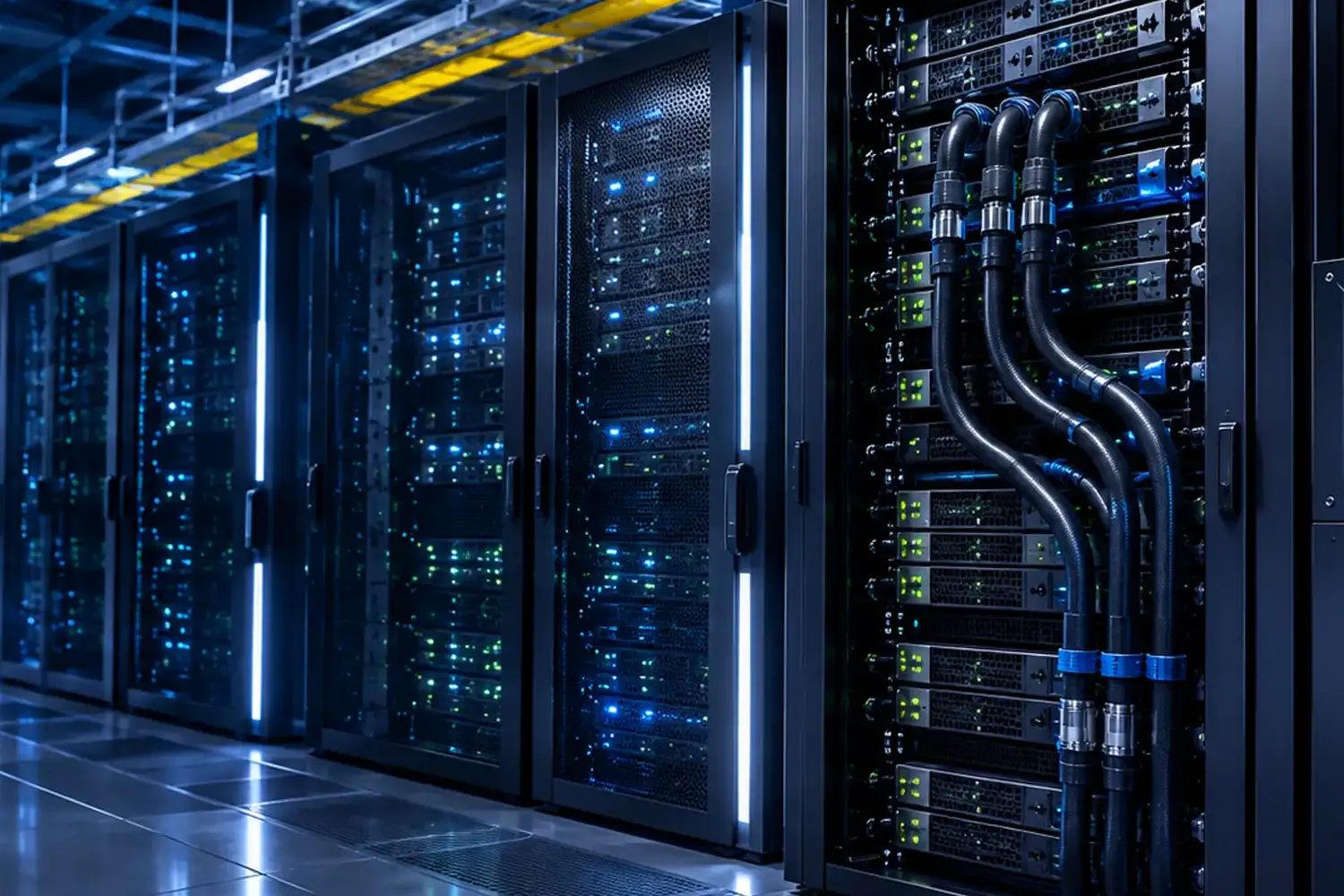
Instead of attempting to cool the entire server environment with air, liquid cooling transfers heat directly from high-power CPUs and GPUs through cold plates and coolant loops.

This approach allows significantly more heat to be removed from a smaller physical space.

For facilities planning new AI infrastructure, liquid cooling is therefore becoming less of an optional technology and more of a fundamental design consideration.

Immersion Cooling for Extreme Density

Another approach is immersion cooling, where servers or components are placed in specially engineered dielectric fluids.

Immersion cooling eliminates much of the traditional reliance on server fans and can support extremely high computing densities in a relatively small footprint.

There are also two-phase immersion systems, where the cooling fluid changes phase as it absorbs heat and subsequently condenses back into liquid form.

These technologies remain more specialized than conventional air or direct-to-chip cooling, but their importance is growing as GPU power consumption continues to increase.

The Physical Weight of AI Infrastructure

Power and cooling aren’t the only problems.

A fully populated high-density GPU rack can weigh thousands of pounds. The weight comes not only from the servers themselves but also from power cables, networking equipment, cooling infrastructure and the rack structure.

That creates another engineering question:

Can the building actually support the equipment?

Traditional raised-floor systems may not be suitable for extremely heavy GPU racks without additional reinforcement.

High-density facilities may instead use reinforced concrete slabs, structural steel platforms or overhead support systems to distribute the load.

For data center operators upgrading an existing facility, structural engineering therefore needs to be considered alongside electrical and cooling upgrades.

Cabling Becomes a Major Engineering Problem

AI clusters also require enormous amounts of networking infrastructure.

High-performance GPU systems depend on high-speed interconnects to allow GPUs to communicate with one another efficiently. A single high-density rack can contain hundreds of power, networking, management and monitoring cables.

Poor cable management can create several problems:

  • Restricted airflow
  • Increased physical weight
  • Difficult maintenance
  • Reduced serviceability
  • Signal integrity problems
  • More complicated troubleshooting

As rack density increases, cable routing and documentation become increasingly important parts of the deployment process.

Redundancy Becomes Critical

The consequences of a failure become much greater when a single rack contains millions of dollars of computing equipment.

A failure involving power, cooling or networking can potentially interrupt a large AI workload and result in significant downtime.

For this reason, high-density deployments often require redundant power and cooling paths.

Independent power feeds, redundant cooling distribution units and carefully designed control systems can help prevent a single component failure from bringing down an entire workload.

The goal isn’t simply to make the system powerful.

The goal is to make it powerful, predictable and resilient.

Safety Cannot Be Overlooked

High-density GPU infrastructure also introduces serious safety considerations.

Electrical systems operating at high power can create significant arc-flash hazards. Meanwhile, liquid cooling introduces another class of risks involving leaks, containment and the proximity of coolant systems to electrical equipment.

Modern facilities therefore need multiple layers of protection, including:

  • Electrical protection and arc-flash mitigation
  • Leak detection
  • Coolant isolation
  • Early smoke detection
  • Emergency power-off systems
  • Proper equipment grounding
  • Secondary containment

The higher the rack density becomes, the more important these systems are.

The Future of AI Data Centers

The biggest takeaway is that AI infrastructure is changing the definition of a high-density data center.

A rack that consumes 100kW would have been considered unusual only a few years ago. Today, systems at or above this level are becoming increasingly relevant to organizations deploying large-scale AI infrastructure. Introl’s analysis also points toward substantially higher rack densities in future generations.

This means data center operators cannot simply design for today’s GPU hardware.

They need to consider what the next generation will require.

That could mean installing higher-voltage power distribution, reserving capacity for liquid cooling, reinforcing floors, improving cable infrastructure and designing redundant systems from the beginning.

The Bottom Line

The evolution toward 100kW+ GPU racks is not simply a story about faster GPUs.

It is a story about power, heat, buildings, networking and engineering all converging around AI.

As computing density continues to increase, successful data centers will need to treat electrical distribution, cooling, structural capacity and reliability as one integrated system.

For organizations preparing for the next generation of AI infrastructure, designing for today’s requirements may not be enough. Future-proofing the facility for significantly higher rack densities could become one of the most important infrastructure decisions they make.


Source & Attribution

Source: Building 100kW+ GPU Racks: Power Distribution and Cooling Architecture
Author: Blake Crosley
Published: January 19, 2026
Originally published by: Introl

Read the full original article on Introl:
https://introl.com/blog/building-100kw-gpu-racks-power-cooling-architecture

Editor’s Note: This article is an original editorial adaptation based on information presented in the original Introl publication. It has been rewritten for our readers and is not a reproduction of the original article.